An introduction to the work in Ghana
Water projects in North Tongu district – Owned and managed by the communities
 Water is Life! Kpokope Community at standpipe

The Mafi-Zongo Area Water Project is located in the North Tongu District of Ghana’s Volta Region. AMURT was invited to assist the communities in the mid 1990’s, when, in addition to lack of access to safe water, the area was severely affected by Guinea worm. The project is community owned and community managed, with AMURT acting as a partner. We worked closely with community leaders to organize the local population to provide communal labor and take responsibility to start the water project. AMURT has brought in funds from international donors, along with technical assistance. Today AMURT continues to give logistical and organizational support, while project is run by the communities themselves. Today, the Mafi-Zongo Water Project serves close to 9,000 people in 26 communities. Surface water is harvested in a dam created by a 600 meter long dike on a seasonal river. The water is treated by roughing filters and slow sand filtration before being pumped to a reservoir built on a mountain central to the project area. From there the water flows by gravity through a 54 km long pipe network, and is made available to the population through 45 standpipes. The operation is ‘pay and fetch’. The charge is 5 Ghana pesvas for two buckets, which comes out to about USD 0.0175 for a 20 liter bucket. The income is used buy diesel for the fuel generator that runs the pump and allowances for the staff.

To contribute you can donate online here for the Mafi Zongo Water project.
COMMUNITY HEALTH – MAFI-SEVA COMMUNITY CLINIC
In 2002, the communities of the Mafi-Zongo Water Project Area requested AMURT’s assistance in meeting the healthcare needs of the communities. Strengthened by the confidence gained from the water project, they felt ready to address the lack of health care in the area. In May 2003 the Mafi-Seva Community Clinic opened as a community based project, initiated by, owned by and managed solely by locals. AMURT role is that of a partner to bring technical assistance and training and help expand and improve the services available at the clinic. All the staffs hail from the project area. The clinic provides 24 hours primary health services and a maternity ward. In 2005 AMURT and the clinic staff started health education outreach programs in the project area. In early 2009, the clinic installed a laboratory that can test for all the most common complaints in the area, including malaria, typhoid, STD’s, anaemia, HIV, etc. In the fall of 2009, the clinic opened a family planning clinic, giving the local population many new choices for contraception.

The staff at Mafi-Seva Community Clinic – December 2009
To contribute you can donate online here for the Mafi-Seva community Clinic.
Community Health Education – The Kekeli Women – Village Health Promoters
Participatory video made by the Kekkeli women themselves
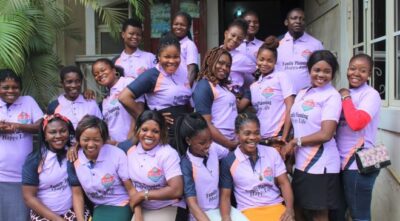
Since 2005, AMURT and Mafi-Seva Community Clinic has been collaborating on health education out reach program. More than 30 communities, with the population of over 10,000 people benefit from regular health education and out reach services. The long list of issues addressed includes hygiene and sanitation, malaria prevention, child nutrition, high blood pressure, sexual health, HIV awareness, maternal health, alcohol and drug abuse, etc. The strategy has been to train local women village as health promoters, called Kekeli Women (Kekeli means brightness). The candidates, elected by the women in their community, join a one month training course, and work as front line health workers, concentrating on health education and consciousness raising. The Kekeli Women work in groups, often choosing to teach through drama and role play.

SAFE MOTHERHOOD – TRAINING TRADITIONAL BIRTH ATTENDANTS In rural Ghana the majority of women still prefer to give birth at home, thus the importance of the TBA’s, Traditional Birth Attendants. AMURT and Mafi-Seva Community Clinic provide ongoing training for more than 30 TBA’s. They are also given equipment and supplies to enable them do more hygienic deliveries. The cooperation between the TBA’s the community clinics and the district hospital is now greatly improved to ensure greater safety for mothers and children. Since the summer of 2009, we have started an antenatal anaemia program, providing iron supplements to all pregnant women in the project area through the network of the TBA’s.

To contribute you can donate online here for the Kekeli Women and the Maternal Health Program.
You can learn more about our work in Ghana by visiting the Ghana page on africa.amurt.net.